The Constitution India Borrowed, But Never Copied : Sources of the Constitution
Ask anyone where the Indian Constitution came from, and you’ll probably hear, “It’s borrowed from other countries.” While that’s correct, it doesn’t tell the whole story. The Constituent Assembly didn’t just lift provisions wholesale, it studied constitutions across the world and picked only what fit India’s own socio-political reality.
That’s why historians call it a borrowed but not copied Constitution. Here’s where each piece actually came from.
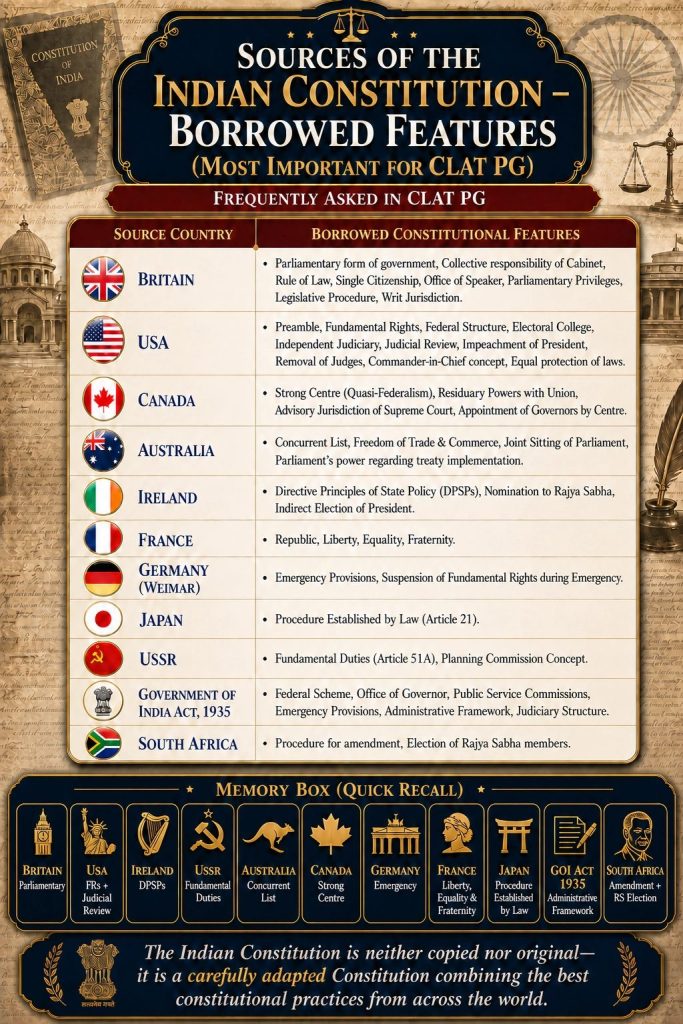
Britain Gave Us the Machinery
- Parliamentary form of government
- Cabinet system
- Collective responsibility of the Council of Ministers
- Rule of Law
- Single citizenship
- Office of the Speaker
- Writ jurisdiction
America Gave Us the Philosophy
- Preamble
- Fundamental Rights
- Independent Judiciary
- Judicial Review
- Federal system
- Impeachment of the President
- Removal of Supreme Court and High Court judges
Canada Shaped Our Federalism
- Federation with a strong Centre
- Residuary powers vested in the Union
- Advisory jurisdiction of the Supreme Court
- Appointment of State Governors by the Centre
Australia Filled in the Gaps
- Concurrent List
- Freedom of trade and commerce
- Joint sitting of both Houses of Parliament
- Parliament’s power to implement international treaties
Ireland Gave Us Direction, Literally
- Directive Principles of State Policy (DPSPs)
- Nomination of members to the Rajya Sabha
- Indirect election of the President
France Gave Us the Ideals
- Liberty
- Equality
- Fraternity
- Republican form of government
Germany’s Weimar Constitution Shaped Our Emergencies
- Emergency provisions
- Suspension of certain Fundamental Rights during an Emergency
Japan Gave Us One Powerful Phrase
- Procedure established by law” under Article 21
The USSR Gave Us Duties, Not Just Rights
- Fundamental Duties (Article 51A)
The 1935 Act Was the Real Blueprint
- Federal administrative framework
- Office of the Governor
- Public Service Commissions
- Judicial structure
- Administrative framework
South Africa Gave Us Flexibility
- Procedure for Constitutional Amendment (Article 368)
- Election of Rajya Sabha members through Proportional Representation by the Single Transferable Vote (STV)
Next time someone calls the Indian Constitution “unoriginal,” remind them it’s the opposite. Borrowing eleven different frameworks and stitching them into one working document, without any of them dominating, might be the most original act of all.
Subscribe for updates
Join 10,000+ subscribers.
HA
Hanspal Bakul
Contributing author
Have a doubt about this?Ask Doubts